

Here are recent rough notes from the site.
In particular, here are a few things Amazon gets wrong about its own commissioned report, leading my study quibbles:
- The study is partial equilibrium, not full. It doesn't model system changes in supply and demand, thus making it unable to support Amazon's claims.
- Revenue is estimates marginal cost at the time of the subsidy, thus excluding margin tightening, externalities, etc.
- "Surplus revenue" is an accounting term, at best, not ratepayer relevant
Wrt data center propaganda, the Amazon spin of a study it commission—showing no data center effect on rates, it trumpeted—is particular problematic. The study it cites, which it paid for, does not make as heroic of claims as Amazon assigns to it. https://www.ethree.com/wp-content/uploads/2025/12/RatepayerStudy.pdf
The propaganda machine around data centers is spinning, unsurprisingly given the measured effects on rates, NIMBY-ism, and a general sense in communities these great beasts are slouching into their neighborhoods in ways they don't condone.
Two recent examples:
1/ https://www.bloomberg.com/news/newsletters/2026-01-16/microsoft-and-meta-are-running-commercials-to-sell-data-centers-to-locals
2/ https://www.aboutamazon.com/news/sustainability/data-centers-electricity-bills-grid-power-amazon
Good phrase from new paper on how AI is breaking brains:
Cognitive surrender: the uncritical adoption of AI-generated outputs as one’s own judgments, bypassing intuition and deliberation and transferring cognitive control to the system, reducing one’s ability to reason
Thinking—Fast, Slow, and Artificial: How AI is Reshaping Human Reasoning and the Rise of Cognitive Surrender
https://sciety.org/articles/activity/10.31234/osf.io/yk25n_v1?utm_source=sciety_labs_article_page
The confluebce of foreces that have produced near-record equity prices in the U.S. is fascinating, from the rise of AI, to rates, to economic uncertainty leading to over-allocation to equity, to TINA (there is no alternative). The effect is fragility with an over-determined break almost ceertaintly ahead.

Younger generations, increasingly uneasy with a post-AI future, are investing more in the stock market, seeing it as a lottery ticket with which they can protect themselves. This is entirely predictable, this rise of gambling in the face of rising economic uncertainty, and has been seen in research repeatedly. [Source: Oliver Wyman Forum survey]
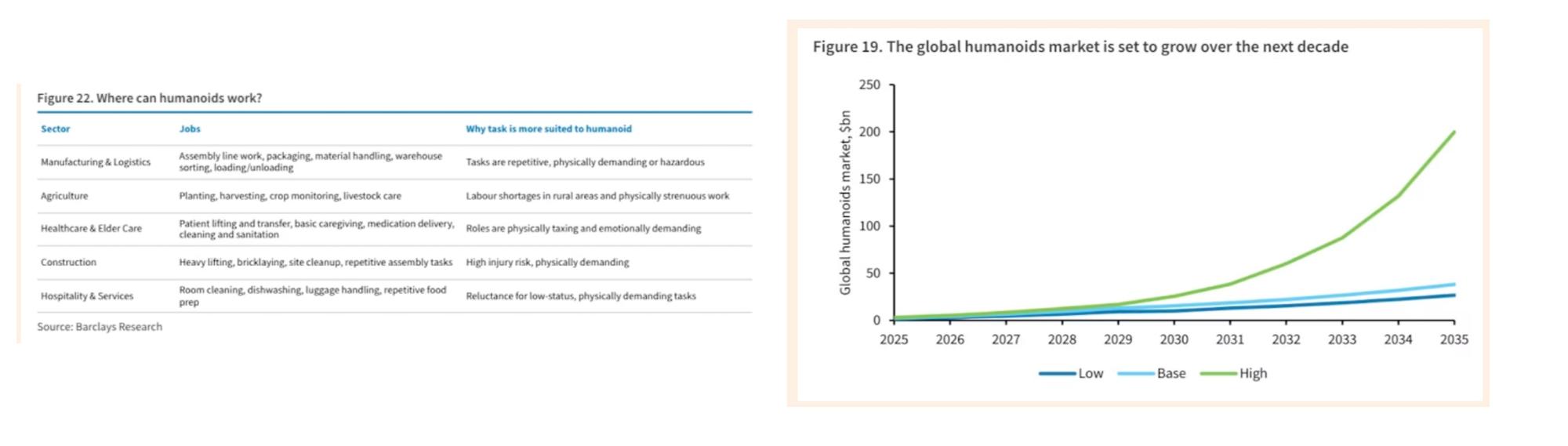
The sell-side infatuation with robots knows few limits, other than replacing themslves, of course. A new Barclays report is a full-on rave wrt future robot-centric human labor replacement. Worth scanning, in part because robot-related token usage floats many AI inference boats https://www.ib.barclays/content/dam/barclaysmicrosites/ibpublic/documents/our-insights/impactseries14/Barclays%20Impact%20Series%2014%20-%20AI%20Gets%20Physical.pdf
My usually-gloomy friend Nouriel Roubini sounding remarkably bullish about the AI-related GDP growth prospects for the U.S., even if much of the benefit doesn't necessarily flow to tech companies. https://www.bloomberg.com/news/articles/2026-01-13/roubini-sees-ai-boom-offsetting-risks-from-trump-to-geopolitics