Here are recent rough notes from the site.
Good overview of how AI is a cybercriminality and fraud tailwind:
Four facts:
- AI tools blur instructions and data, enabling easy misuse.
- Prompts, chats, and code are leaking via adjacent tools.
- Attacks are faster, cheaper, and more scalable than defense.
- Humans trust AI output too much, weakening judgment.
The last one, in particular, is crucial and misunderstood.
https://www.backblaze.com/blog/the-new-shape-of-risk-how-generative-ai-is-changing-the-security-landscape/
New network data from Backblaze quietly kills the neocloud bull case. AI traffic in an inference world is increasingly bursty, concentrated, and rotating back to hyperscalers post-training. That implies cyclicality, utilization risk, and a capped TAM. Neoclouds persist, but as shock absorbers for peaks, not as compounding infrastructure.
https://www.backblaze.com/blog/network-stats-for-q4-2025-neocloud-traffic-trends/

Texas is flipping from YOLO data center grid connection to a centralized approach, putting dozens of speculative projects at risk.
Keys:
• Texas has >250 GW of requests vs ~85 GW of system capacity.
• 8.2 GW of approvals are under re-review, the equivalent of ~8 nuclear reactors.
• Texas is basically saying prior approvals are unreliable because the denominator exploded.
Fun.
https://www.bloomberg.com/news/articles/2026-02-03/texas-considers-revisiting-some-data-center-grid-approvals
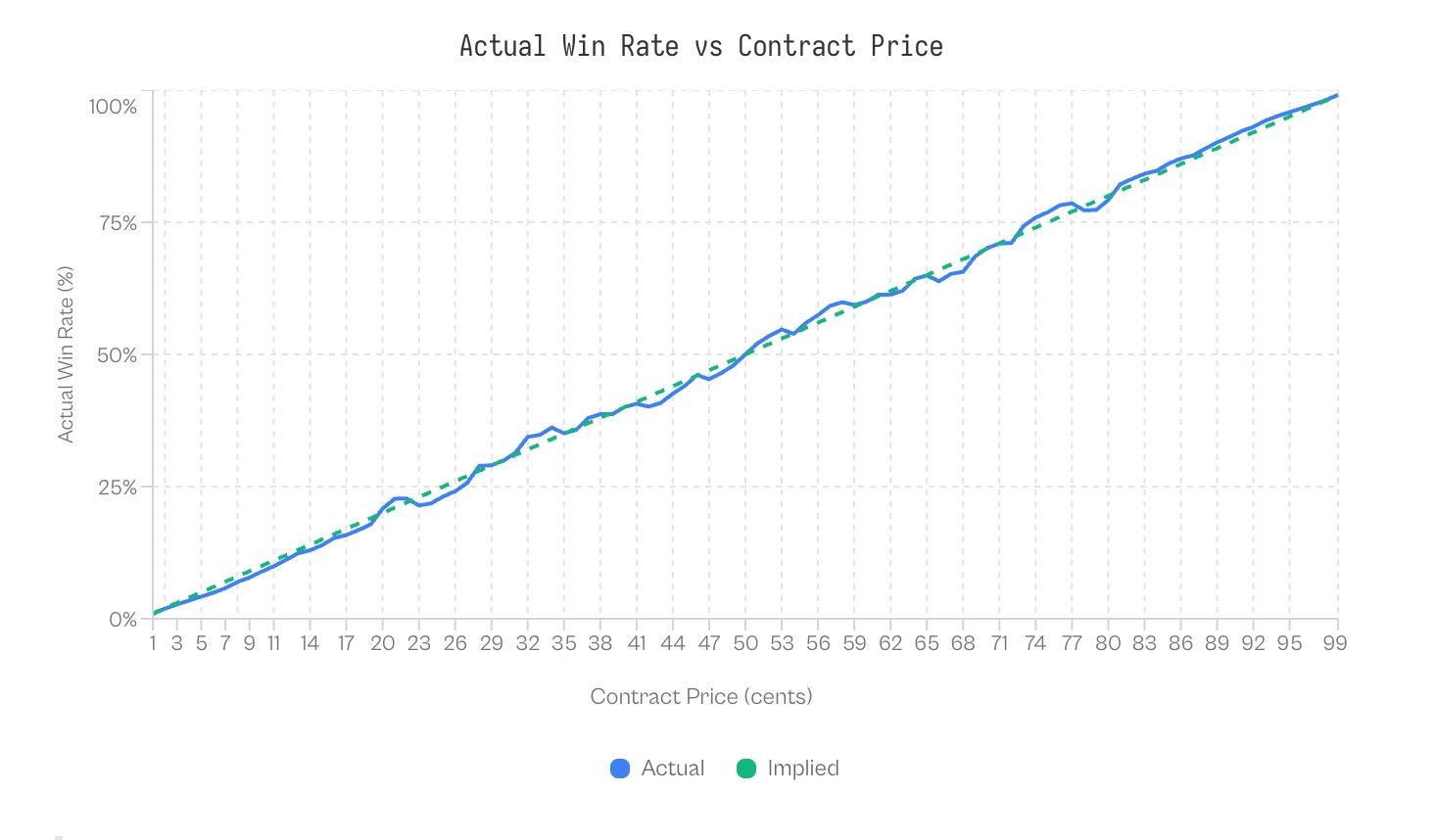
I wasn't originally going to post this, because the data provenance is not clear—how does he have so much Kalshi data?—but it is interesting on the microstructure of prediction markets, and the ongoing wealth transfer.
In particular, he shows the favorite-longshot bias at work: "Contracts trading at 5 cents win only 4.18% of the time, implying mispricing of -16.36%. Conversely, contracts at 95 cents win 95.83% of the time."
https://www.jbecker.dev/research/prediction-market-microstructure