Here are recent rough notes from the site.
Credit card interest rates are in the news. Leaving aside calls to fix rates at lower levels, and the consequences thereof, what is interesting is where they are—near record highs—and how they got there.
The primary reason: The Fed's sharp post-Covid rate rises trying to slash inflation. This raised the prime rate and forced issuers to raise variable APRs. Incrementally more pressure came from lenders widening their margins to cover risk and sustain profits.

The latest updates to Duke Energy's spending plans are bananas:
- $103B five-year capital plan (up +18% since Nov 2025)
- Deploying >$1B per month.
- Data centers driving growth: 1.5 GW of new data center contracts since Nov
- Funding mix: ~$10B new equity issuance planned 2027–2030
- Rate increases approved in SC, pending in NC.
Source:
https://www.utilitydive.com/news/103-billion-duke-claims-largest-spending-plan-of-any-regulated-us-utility/812047/

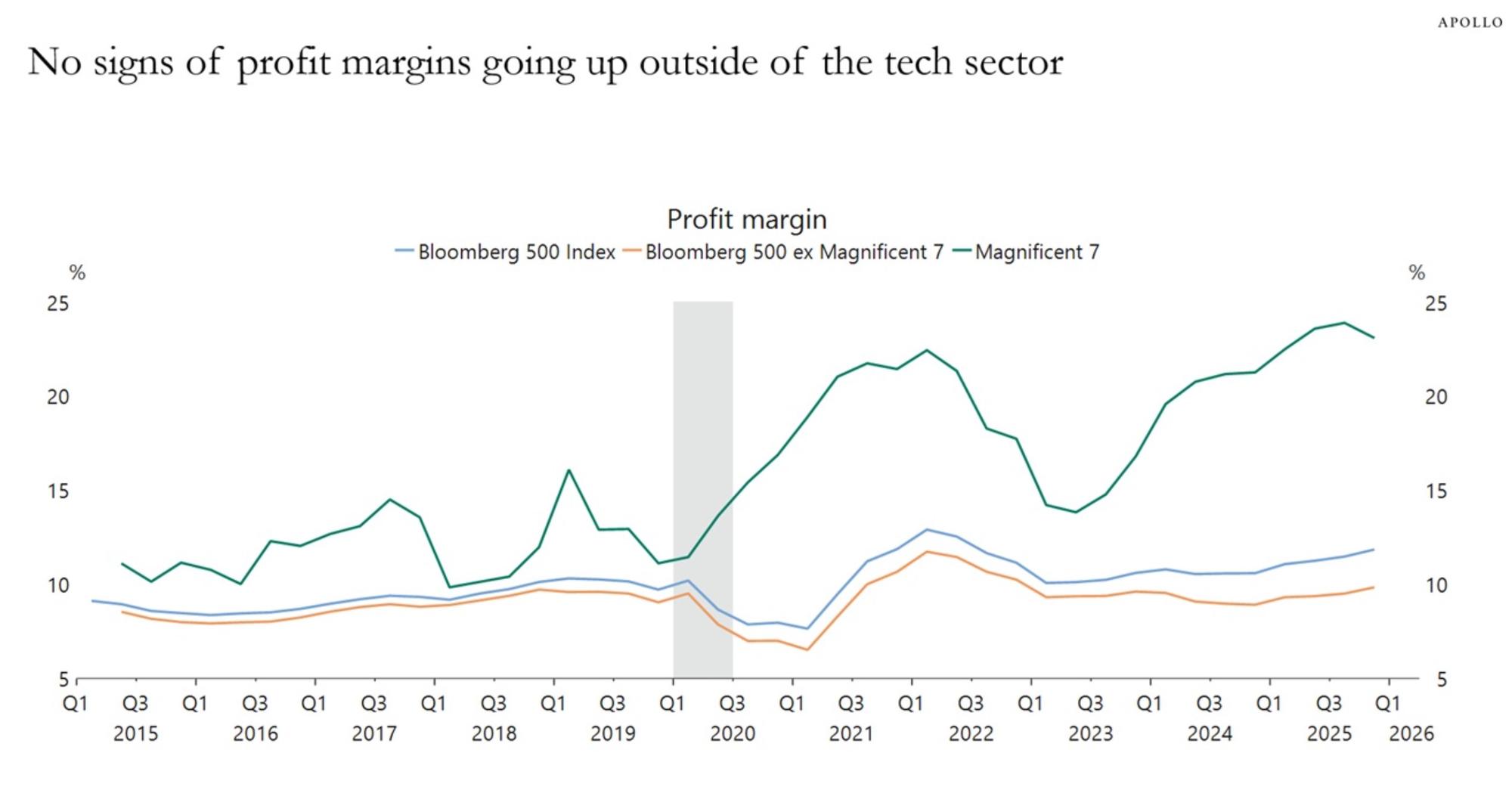
As ever, most of the (early) benefits to technology accrue to the tech industry itself. I have written about this many times here, often citing a recent paper (https://www.chicagofed.org/publications/chicago-fed-letter/2025/515). We see it again in the early days of the current AI, as Apollo points out here.
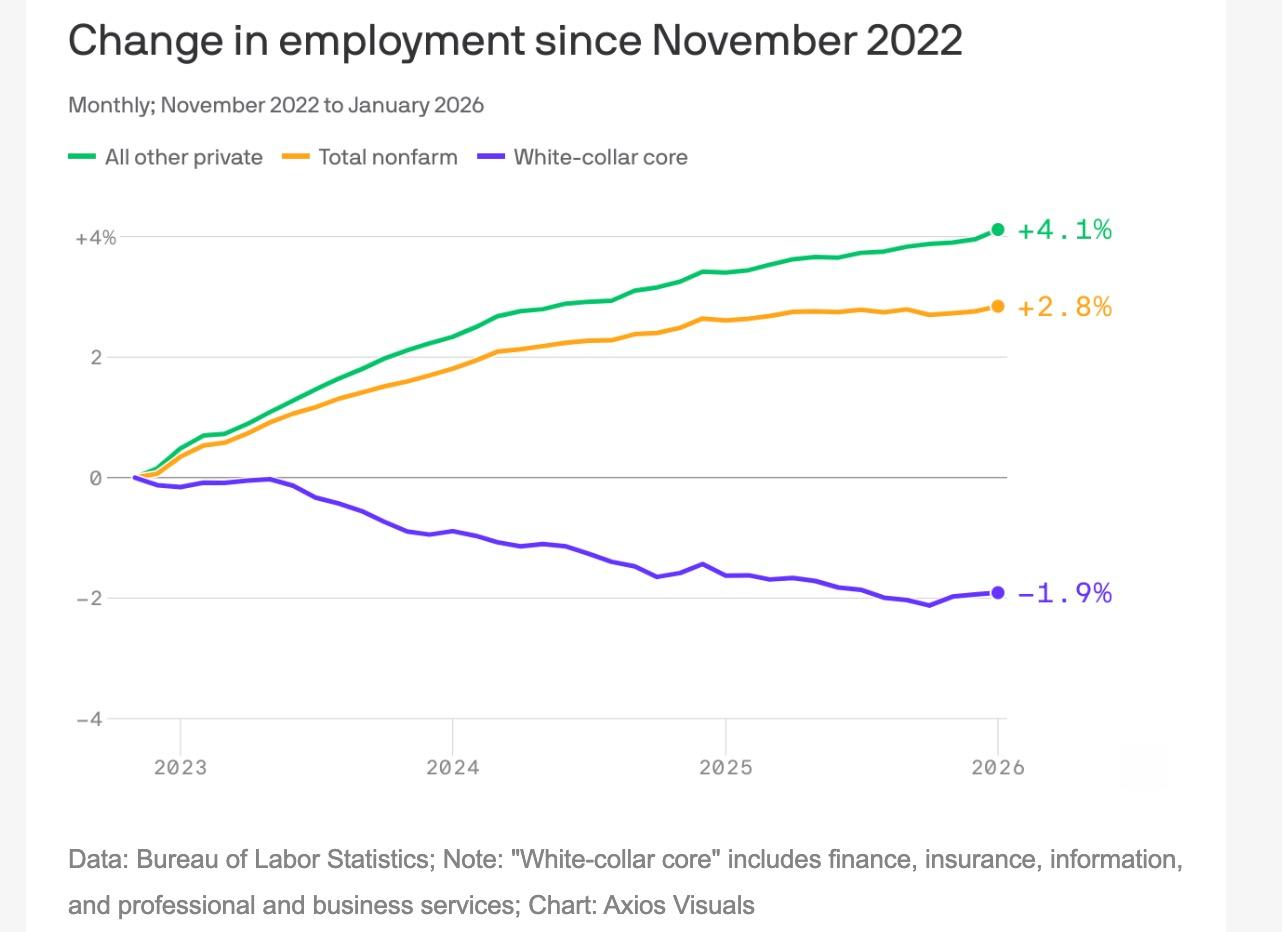
GDP is growing, but white-collar hiring has stalled. New BEA/BLS data show that Finance, Insurance, Information, and Professional & Business Services jobs—40% of GDP—no longer grows with GDP. If this productivity shift sticks, it helps explain weak entry-level hiring despite GDP growth.
https://gadlevanon.substack.com/p/a-productivity-regime-shift-in-the?utm_source=newsletter&utm_medium=email&utm_campaign=newsletter_axiosmacro&stream=business