

The U.S. leads the world in stock ownership, as well as being at record high levels in its own series history. This makes retail investors the real force in capital markets, not merely side players, as has become increasingly clear for a decade now.
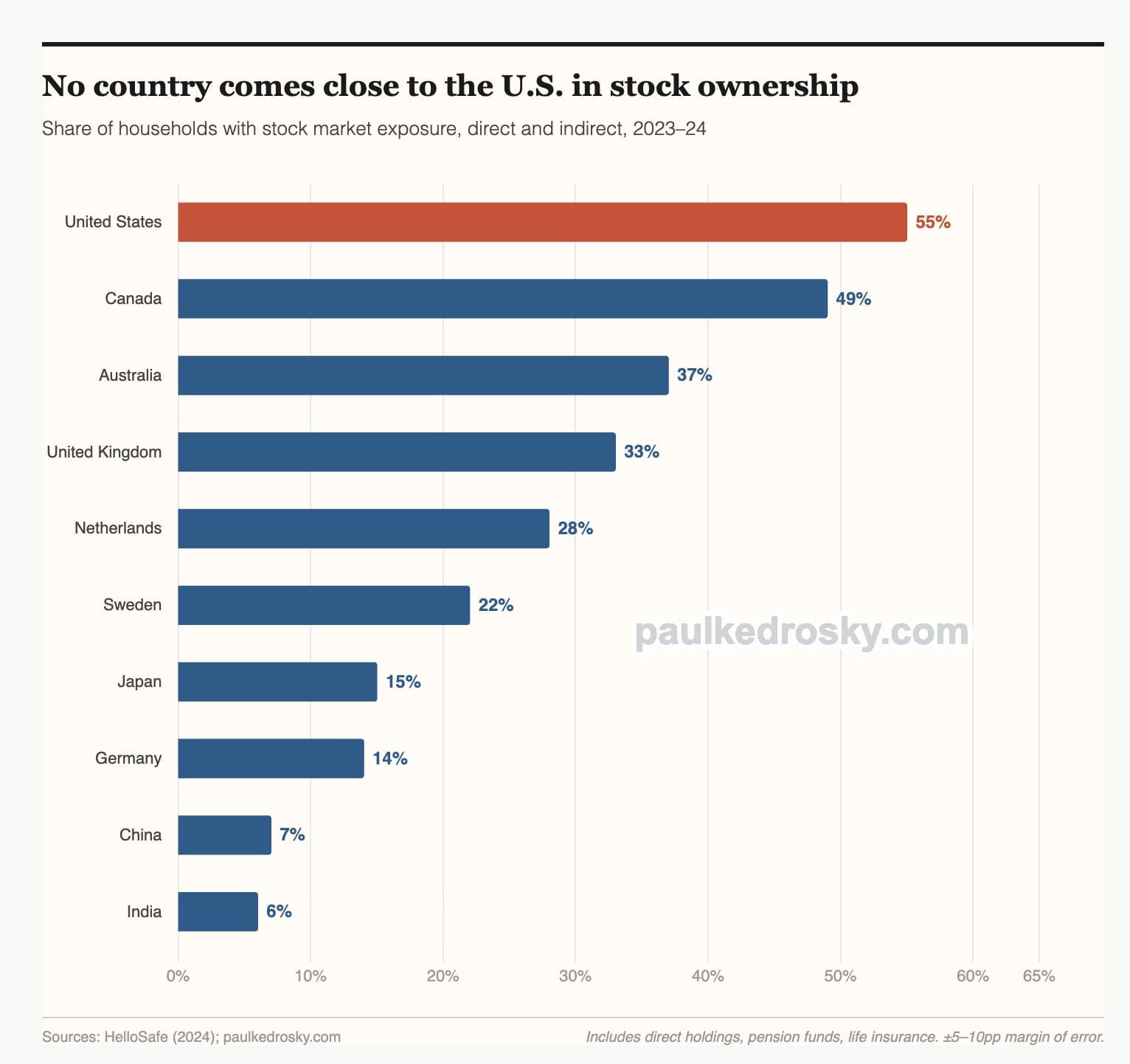
This, of course, has consequences. Here are six:
- Monetary policy transmission is direct. When the Fed lowers (raises) rates, US households buy (sell) stocks. No other central bank has this much control over consumer sentiment and spending via markets. The wealth effect makes policy both more powerful and harder to control.
- Markets and politics. When 60% of households own stocks, markets drive elections. Politicians and central bankers in the US hate crashes almost as much as they hate high gas prices. This holds down volatility and encourages whacky risk-taking.
- Passive indexing makes it worse. Most of that 60% own stocks through 401(k)s and IRAs invested in index funds. This means a huge share of American household wealth is concentrated in the same ~500 companies, weighted by market cap. Diversification is an illusion at the aggregate level. Everyone is long NVIDIA, whether they know it (or want it) or not.
- Retirement security is market performance. The US shifted from defined benefit to defined contribution pensions over the last 40 years. A sustained bear market is no longer just a financial event — it's a retirement crisis.
- Inequality is amplified. The 60% figure is misleading because the bottom half of that cohort owns virtually no stock. The top 10% hold ~90% of equity wealth.
- Contagion from US markets is a virus. Because US households are so deeply exposed, a domestic equity crisis hits consumer spending, which then spreads worldwide through trade. The US market is the world's risk-off/risk-on switch, and the household exposure ratio is part of why.