

- The semiconductor industry is among the most boom-bust industries on earth.
- The current semiconductor sell-off is the delayed repricing of an increasingly expensive AI capital-spending cycle.
- Three reinforcing cycles—AI infrastructure, memory capacity, and credit—are beginning to turn together.
- HBM scarcity remains real but is temporary; it cannot escape the underlying economics of DRAM.
- KOSPI and SOXL are amplifying the unwind through concentration, leverage, and positioning.
The unwind numbers in the AI supply complex are impressive, with more than $3 trillion erased in just a few names, indices, and leveraged ETFs.
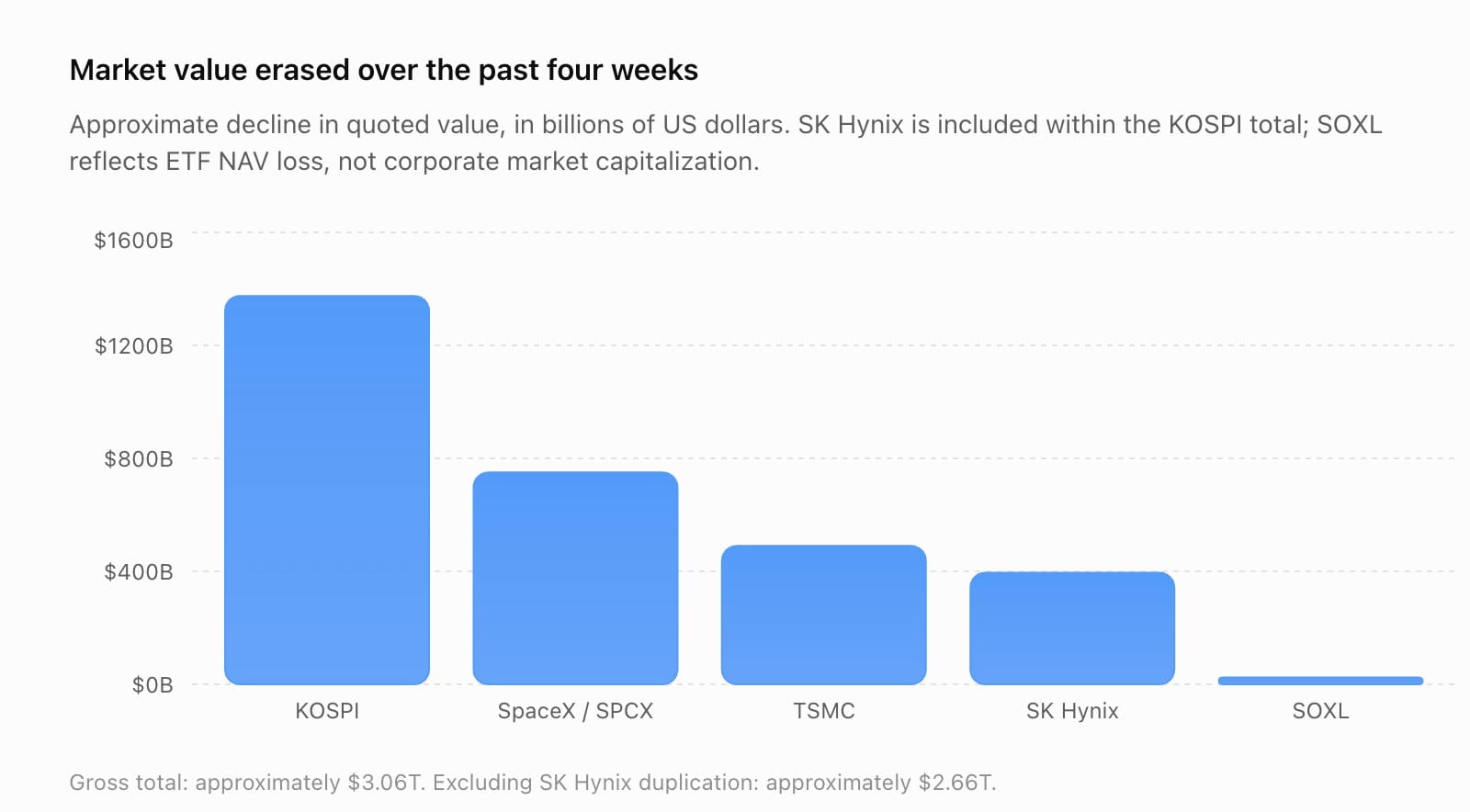
As I've argued for some time, one precipitating event (even if it was over-determined) was likely the SpaceX IPO. It caused a reallocation of capital away from some comparable names, and then another flow into it as it was added to indices, and now a giant unwind as its index weight collapses and diminished capital flows outward again.
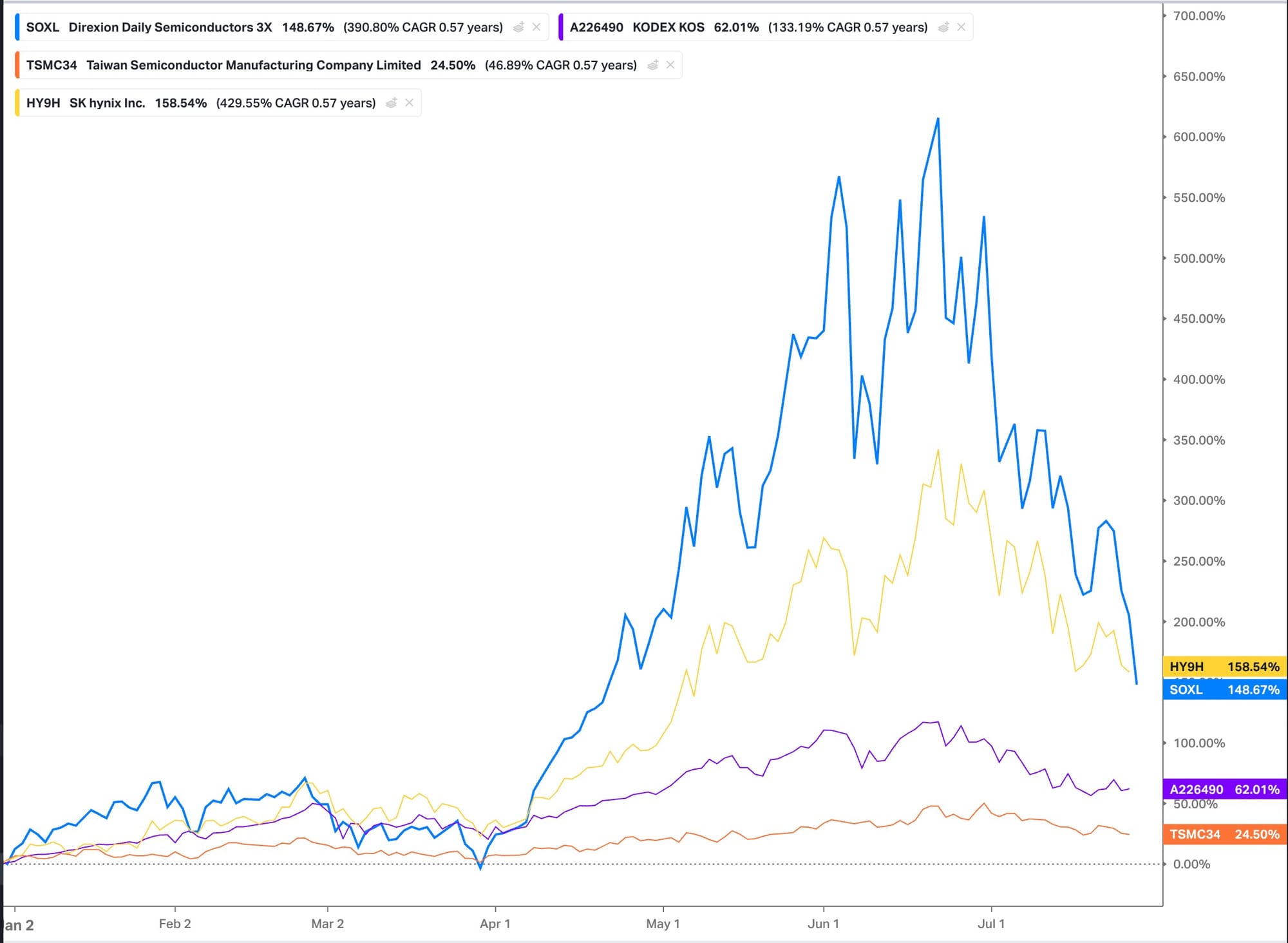
Turning back to the core industry dynamics, the underlying problem has been visible for some time:
- AI infrastructure spending increasingly depended on three assumptions:
- Hyperscaler capex could keep rising,
- Financing would remain cheap and abundant
- Temporary shortages in compute and memory would persist long enough to support exceptional margins.